Costa Brava is full of towns worth stopping in. Some preserve old fishing districts by the Mediterranean; others surprise with walls, medieval streets, and stone houses just a few kilometers from the beach.
Among the charming towns of Costa Brava, Pals, L’Escala, L’Estartit, Begur, Calella de Palafrugell, Peratallada, and Tossa de Mar stand out. Each offers a different experience, so the best choice will depend on whether you’re looking for beaches, nature, historical heritage, gastronomy, or a quiet place from which to discover the Coast.
If you’re planning a vacation in this area, choosing a good base can also make a difference. Staying several days in places like L’Estartit, L’Escala, or Pals allows you to combine beach days with excursions to some of the most charming towns in Empordà.
Which are the prettiest towns on the Costa Brava?
There isn’t just one answer. Part of the Costa Brava’s appeal lies in the variety of its towns.
You’ll find medieval villages surrounded by countryside, old fishing communities, small towns right on the Mediterranean, and destinations surrounded by natural spaces.
Here are a few that are well worth including on your route.
Pals: a medieval village just a few kilometres from the sea
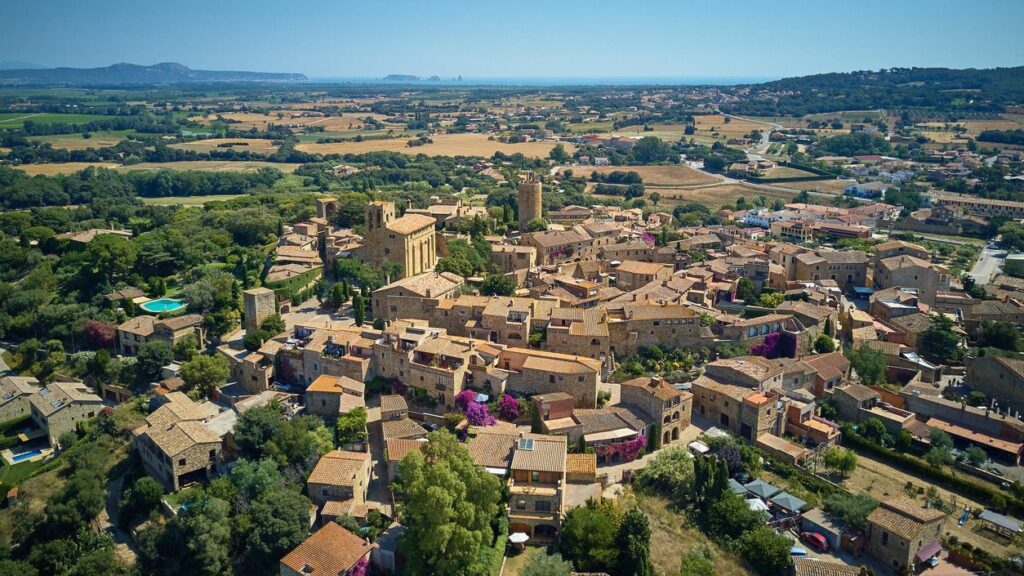
Pals is the highest-altitude Costa Brava town we’re going to mention. It sits on a hill overlooking the Empordà plain, and its historic centre, the Barri del Pedró, is one of the best preserved in the area. Its walls, its streets—stone, of course—and its Gothic houses make strolling around feel almost like travelling back in time.
The town’s symbol is the Torre de les Hores, the Romanesque keep of the old castle, to which a Gothic bell tower was added when the castle was demolished in the 15th century.
You should also visit the Gothic church of Sant Pere and, from the Josep Pla viewpoint—named in honour of the Catalan writer—take in the views over the Empordà fields and the Medes Islands.
Another of Pals’ big draws is its rice fields, where the famous Pals rice is grown.
And if you’re the kind of traveller who brings your golf clubs along, take note: this area has some of the best golf options on the Costa Brava.
Pals is one of those places that breaks the coastal image many people have of the Costa Brava.
Its historic centre is made up of narrow streets, arches, stone houses, and architectural details that preserve the town’s medieval character. Taking an unhurried stroll is the best way to discover it.
One of its biggest attractions is the blend of heritage and the Mediterranean. The historic centre is separate from the beach area, so you can enjoy two different atmospheres on the same holiday.
It’s also a great starting point for exploring nearby places like Begur or Peratallada.
Pals is a great option if you want to combine:
- History and architecture
- Beach
- Food
- Day trips around the Empordà.
- Charming nearby towns.
If you’re planning to spend several days in this area, it’s worth looking at accommodation in Pals and using the town as a base to explore the surrounding area.
L’Escala: fishing tradition, beaches, and history
L’Escala combines sea, gastronomy, beaches, and history.
It’s a town deeply connected to the sea and known for its anchovies. It also has several beaches and pleasant areas for walking along the water.
Very close by are Empúries, one of the most interesting historical sites in the area, and also SANT Martí d’Empúries, a small town full of charm.
This makes L’Escala a well-rounded option if you want more than just the beach on your holiday.
L’Escala can be a great choice for:
- Families.
- Travellers interested in gastronomy.
- People who want to combine beach and history.
- Seaside holidays.
- Day trips to several Costa Brava towns.
If you’d like to stay in this area, you can check the accommodation in L’Escala available for different types of trips.
L’Estartit: nature, beach, and the Medes Islands
L’Estartit is a great option if you’re looking for nature, beach, and outdoor activities.
It sits opposite the Medes Islands and very close to the Montgrí massif, making it an ideal destination for combining beach days with excursions and sea-related activities.
Its wide beach also makes it a very comfortable option for families.
What’s more, its location makes it easy to visit other places in Baix Empordà such as Pals, Begur, or Torroella de Montgrí.
L’Estartit can be a great base if you’re looking for:
- Beach.
- Family holidays.
- Nature.
- Water activities.
- Day trips around the area.
- A quiet stay by the sea.
You can check accommodation in L’Estartit if you’d rather stay in one place for several days and take day trips from there.
Begur: history, views, and coves
Begur is a Costa Brava town that stands out for its castle and its Indiano houses—the mansions built by those who returned wealthy from the Americas.
From the top of the castle, on clear days, you can see the Medes Islands and even Cap de Creus. But what draws people to Begur most is its sandy beaches, among the prettiest coves on the Costa Brava. These are the best known:
- Sa Riera: the largest, and the closest to the town.
- Sa Tuna: a sheltered, pebbly cove, with old fishermen’s houses along one side.
- Aiguafreda: small and tucked away, with a jetty for boats.
- Aiguablava: known for its turquoise, shallow water.
You can walk between them along the coastal path. And if you’re still craving more beach time, don’t forget Muro Beach.
Its old quarter has wonderfully charming streets and is crowned by the remains of its castle, from where you can enjoy great views of the surrounding area.
Plus, along its coastline you’ll find some of the Costa Brava’s best-known coves, such as Sa Riera, Sa Tuna, and Aiguablava.
Calella de Palafrugell: a seaside vibe and small beaches
Calella de Palafrugell is a small coastal settlement that has kept its timeless feel. You’ll recognise it by its white houses right by the sea, its boats pulled up on the sand, and, of course, its friendly locals.
While you’re here, you should visit the Cap Roig Gardens, a botanical garden founded in 1927 that covers more than 20 hectares and, in July and August, becomes the venue for a music festival.
Another must-see is the Cantada d’Havaneres, held in Port Bo square in early July and drawing more than 30,000 people. And if you visit at other times, stroll around Port Bo and look out for Les Voltes, the vaulted arches facing the sea that were built in the 19th century as fishermen’s workshops and are now restaurants—everything they make is delicious, by the way.
And you really shouldn’t leave—especially if you’re into hiking or cycling—without doing a stretch of the coastal path (the GR-92), which takes you to Tamariu in around two hours and stops at a cove or two along the way.
Calella de Palafrugell is one of the most iconic towns on the Costa Brava. Its white houses, small beaches, and seafront streets create a wonderfully pleasant atmosphere for a stroll. Port Bo is one of its best-known spots and one of the most typical images of this area.
It’s also a great place to start a stretch of the coastal path and enjoy sea views. It’s an especially appealing option for couples, quiet getaways, and anyone looking for a more traditional atmosphere.
Cadaqués: white houses and unique landscapes
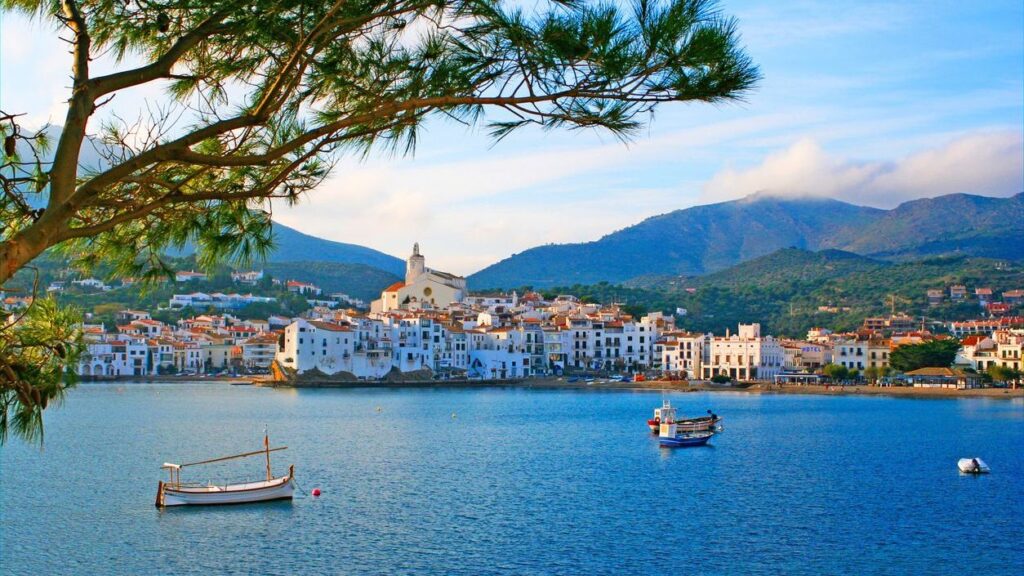
You’ll recognise Cadaqués straight away. It has white houses, like the previous Costa Brava town we’ve mentioned, but it also has a very distinctive church setting. It’s the Church of Santa Maria, surrounded by narrow cobbled streets and always bathed in a light that helps explain why so many artists fell in love with it—and with the town as a whole.
And we’re not exaggerating one bit: Picasso, Chagall, García Lorca, Buñuel, and Duchamp all came here, but the biggest name most associated with Cadaqués is Dalí.
His house is in Portlligat, a bay just outside Cadaqués. It was a fishermen’s hut that Dalí bought and gradually expanded. You can visit it because today it operates as the Casa-Museu Salvador Dalí, a labyrinth of rooms and courtyards designed in dialogue with the landscape. You have to see it, no matter what.
Another essential in Cadaqués is making it to Cap de Creus, a rocky headland at the northeastern tip of the peninsula, with a lighthouse dating back to 1853 and absolutely spectacular views.
Fancy a plan right by the coast? Head over and be amazed by everything there is to do in L’Escala, a nearby town where you’ll find the Greco-Roman ruins of Empúries—and where you can try salt-cured anchovies made with a centuries-old tradition. Cadaqués has a truly special personality.
Its white houses, narrow streets, and setting surrounded by natural landscapes make it one of the best-known towns on the Costa Brava. Cap de Creus is very close by, so you can combine a visit to the town with an excursion to one of Girona’s most famous natural areas.
Cadaqués is a bit further from other parts of the Costa Brava, so it’s well worth dedicating a full day to it.
Peratallada: one of the prettiest medieval villages
Peratallada isn’t by the sea, but it’s one of the towns most worth visiting on a Costa Brava holiday.
Its stone streets, squares, and old buildings create a very special medieval atmosphere.
What’s more, it’s very close to Pals, so it’s easy to visit both on the same day.
It’s a great option if you want to add a bit of history and gastronomy to a holiday focused on beach and nature.
Tossa de Mar: walls by the sea
Tossa de Mar is probably the Costa Brava town that impresses you most the first time you see it. The Vila Vella, a walled enclosure with towers on a headland, is especially striking thanks to how close it is to the sea. No wonder it was declared a National Historic-Artistic Monument in 1931, right?
Inside the Vila Vella you’ll find charming little streets, a 20th-century lighthouse, and a municipal museum that houses a work by Marc Chagall, who called Tossa his “Blue Paradise”. And at the foot of the walls, Es Codolar cove is the perfect spot to watch the sunset.
Tossa de Mar stands out for its walled old quarter, known as Vila Vella. The walls, the old streets, and the sea views make it one of the most recognisable towns on the Costa Brava.
After exploring the historic area, you can spend the rest of the day at the beach or strolling around the surroundings. It’s a destination that beautifully combines history, sea, and holiday atmosphere.